

Lendava Castle stands on a prominent hill above the town of Lendava, on the far eastern edge of Slovenia, directly along the border with Hungary. Its position at the transition between the Pannonian Plain and the slopes of the Lendava Hills gives it a distinct strategic and landscape value. From the castle’s elevated vantage point, one can overlook the wide plain stretching toward Hungary, the terraced vineyards of the Lendava Hills, and the historic town center at the foot of the hill. This interplay of lowland and upland terrain has created a natural passageway since prehistory, shaping the area’s importance for trade, military movement, and cultural exchange.
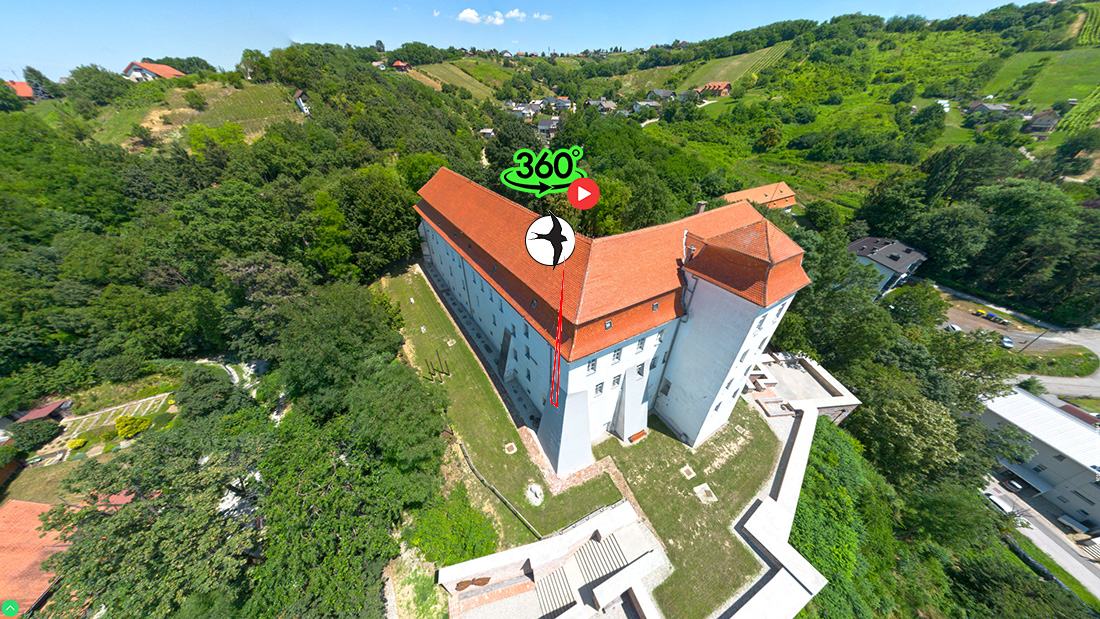
The earliest traces of settlement on the castle hill date back to Late Antiquity, when a small fortification stood here as part of the Roman defensive system along the empire’s eastern frontier. The first reliable medieval reference to the castle appears in the 12th century, when it belonged to the extensive estates of the Hahót family, and later to the Bánffy family, which played a decisive role in Lendava’s history during the 15th and 16th centuries. During the Ottoman incursions, the castle served as an important defensive stronghold on the westernmost edge of the Hungarian border‑fortress system. It was repeatedly damaged, reinforced, and rebuilt, resulting in an architectural form that combines medieval, Renaissance, and Baroque elements.
In the 17th century, the castle acquired a more residential character, with refurbished interiors and representative halls. After the decline of the Bánffy family, it passed into the hands of various noble families, and in the 19th century gradually lost its original function. Following the Second World War, it was nationalized and adapted for cultural and educational purposes.
Today, Lendava Castle is the town’s central cultural institution. It houses the Lendava Gallery–Museum, which manages several permanent and temporary exhibitions, including:
-
a permanent exhibition on the history of Lendava and its surrounding ethnic communities,
-
an exhibition dedicated to György Zala, the internationally renowned sculptor born in Lendava,
-
a permanent fine‑arts collection, complemented by international graphic and sculptural exhibitions.
The castle also hosts numerous cultural events, concerts, literary evenings, and international art symposia. Owing to its location, historical depth, and active museum program, it stands as one of the most important cultural centers in Prekmurje and a symbol of Lendava’s multicultural identity.