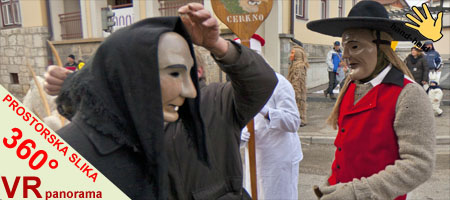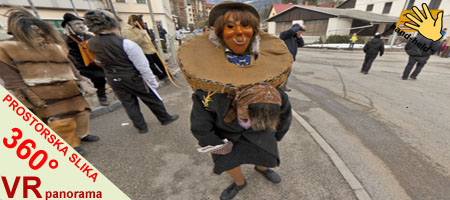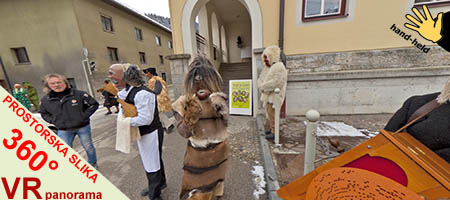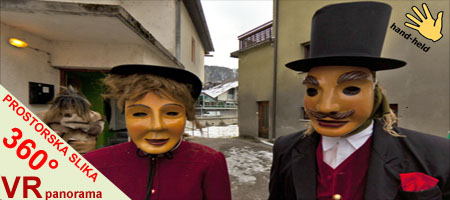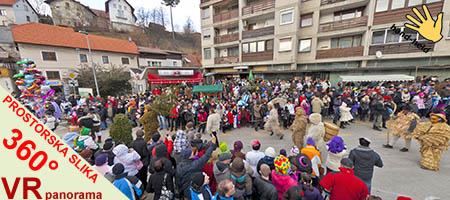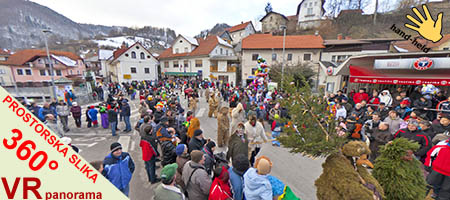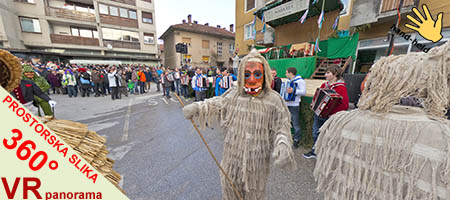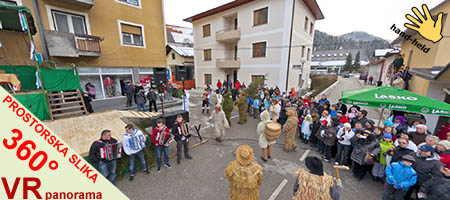

The Cerkno region (Cerkljansko) spans the basin of the Cerknica River and its tributaries at the crossroads of the Idrija Hills, the Škofja Loka Hills, and the Julian Alps. The landscape is defined by steep slopes, narrow ravines, secluded mountain farms, and the central basin surrounding the town of Cerkno. Because of this natural seclusion, dictated by impassable gorges, the region preserved an authentic cultural identity for centuries, complete with a distinct dialect, rich oral traditions, and archaic carnival customs that vanished in other parts of Slovenia under the pressure of modernization.
Historical Evolution and Post-1955 Revival
The roots of the custom date back to pre-Christian spring rituals celebrating fertility, agrarian cults, and the veneration of ancestors. Written records trace the custom to the 19th century, when Laufarija was an indispensable element of winter life among local youth fraternities.
Following World War I, when the Treaty of Rapallo assigned the region to the Kingdom of Italy, the fascist authorities suppressed the custom as part of a campaign banning the public use of the Slovenian language and cultural gatherings. After World War II, the tradition was on the brink of extinction. In 1955, a dedicated group of locals, guided by ethnologist Dr. Niko Kuret and academic painter Boris Kobal, began gathering oral accounts from elderly residents. Based on these precise descriptions, they carved new wooden masks, reconstructed authentic costumes from natural materials, and restored the full dramatic ritual. Today, the Cerkno Laufarija Society (Društvo Laufarija Cerkno) acts as the guardian of this living masterpiece of state significance, registered on the national list of Intangible Cultural Heritage.
The Distinctive Character of the Cerkno Larfe
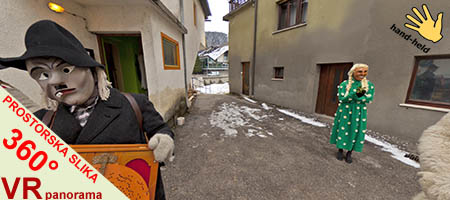
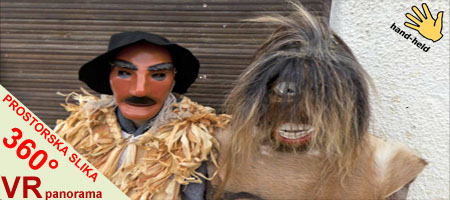
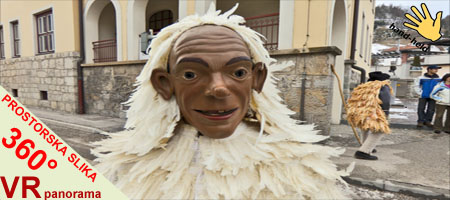
A defining hallmark of Laufarija is its larfe—masks carved from linden wood, distinguished from most other Slovenian carnival masks by their individual characterizations and anatomical realism. Except for Ta star (The Old Man), who wears a half-mask and is the only figure permitted to speak, all characters observe a vow of strict silence. Hand-painted with meticulous precision, the masks portray human emotions, archaic demons, forces of nature, and satirical village archetypes.
The Laufar Family and Detailed Character Breakdown
The Laufar family comprises 25 characters wearing 26 carved masks (Ta koševa features two distinct facial masks on one performer):
-
Core Characters:
-
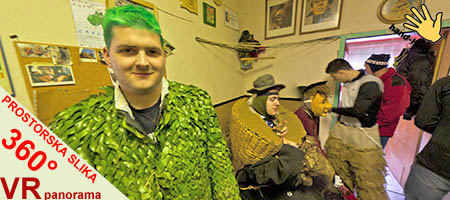
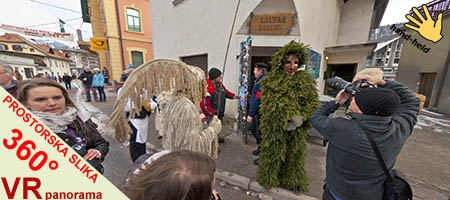
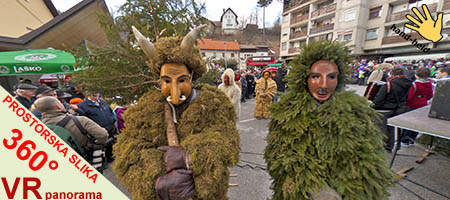
Pust (Carnival): The central culprit personifying winter, laziness, sins, and all misdeeds committed in the community over the past year. He is draped in fresh forest moss (costume weighing upwards of 30 kg), wears horns on his head, and carries an uprooted spruce sapling.
-
Ta smrekov (The Spruce Man): Pust's brother, covered in fresh evergreen boughs, symbolizing the winter woodland.
-
Ta star and Ta stara (The Old Man and The Old Woman): The heads of the Laufar household, dressed in 19th-century Cerkno festive peasant attire. Ta star directs the proceedings and is the sole speaking character.
-
-
Archaic Nature and Ancestral Spirits:
-
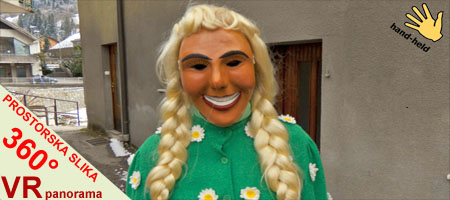
Ta bršljanov and Marjetica (The Ivy Man and The Daisy): Ivy vines and daisy blossoms woven onto green garments herald the end of winter, vegetative growth, and the rebirth of nature.
-
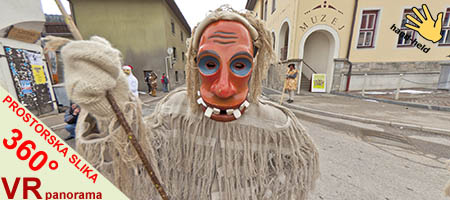
Ta ličnat (The Bast Man): Draped in a cloak of linden bast and holding a shepherd's crook, representing an alpine herdsman.
-
Ta terjast (The Tow-Cloth Man): A grotesque mask with a prominent jaw and protruding teeth, clothed in coarse linen-weaving waste (terje); symbolizes ancestral spirits.
-
Ta mahov (The Moss Man): Clad in woodland moss, embodying the spirit of the forest.
-
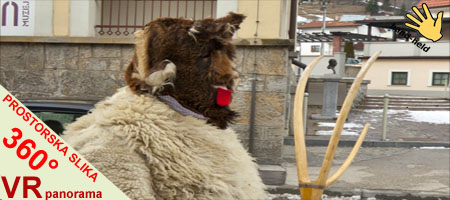
Ta kožuhov (The Fur Coat Man): Dressed in animal pelts, carrying a backpack with a massive cowbell (burovž) that clangs continuously to dispel malicious spirits.
-
Lamant: A wild figure in goatskins wielding a three-pronged wooden pitchfork and heavy rope, responsible for capturing and restraining Pust.
-
-
Social, Occupational, and Satirical Village Archetypes:
-
The Judge, Prosecutor, and Defense Counsel: The tribunal directing the trial in old-fashioned bourgeois dress.
-
Gospod and Gospa (The Gentleman and The Lady): Dignified representatives of the wealthy urban middle class.
-
Ta žleht (The Malicious One): A limping mischief-maker with a barrel organ and a pack laden with pig hooves.
-
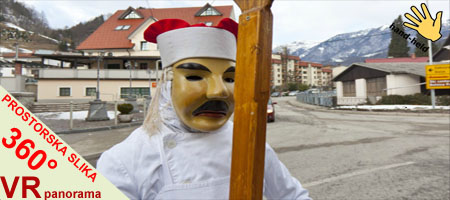
Ta loparjev (The Peel Carrier): A baker holding a peel inscribed with the date and the words "Death to Pust".
-
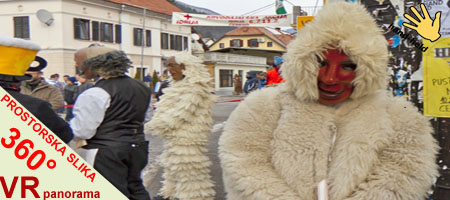
Ta perjev (The Feathered Man): A village eccentric covered in thousands of chicken feathers.
-
Ta koševa (The Basket Carrier): A single performer portraying an old woman carrying her drunken husband in a backpack basket.
-
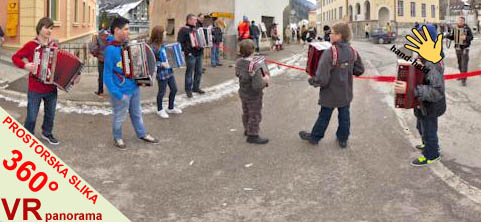
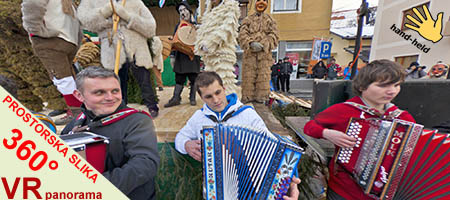
Ta divji (The Wild Man), Ta pijan (The Drunkard), Ta pijana (The Drunken Woman), Cunkler (The Scissor Grinder), The Courier, and Accordion Players.
-
The Carnival Cycle and Ritual Performance
Laufarija is not merely a single-day carnival parade, but a structured multi-week ritual drama:
-
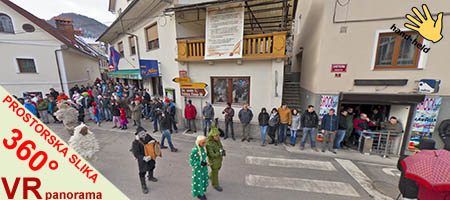
The Gradual Gathering (From New Year to Carnival Sunday): On the first Sunday after New Year's Day, the initial character (Ta prvi) appears in the streets of Cerkno. Each subsequent Sunday after church service, another character emerges from the forest hideout until the entire group is assembled.
-
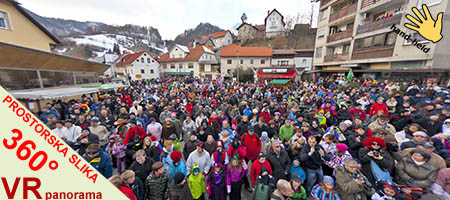
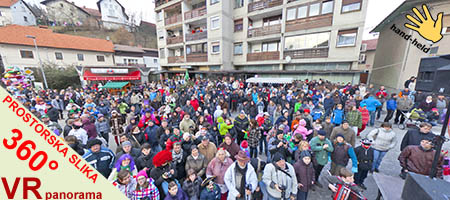
Carnival Sunday (The Indictment and Capture): The full procession marches to the central square. The Judge reads the formal indictment (kalamuon) in the local Cerkno dialect, reciting every fault, blunder, and civic mishap committed by the townsfolk over the past year. Pust attempts to flee but is caught and bound by Lamant.
-
Shrove Tuesday (The Verdict and Execution): The tribunal convenes once more on the main square in the afternoon. Following a final reading of the kalamuon, the Judge pronounces the death sentence. The executioner lays Pust upon the ground and symbolically strikes him down with a single blow from a large wooden club (bot).
The rite concludes with ritual lamentation, funeral melodies played on the accordion, and a celebratory dance of all Laufarji—formally burying winter, cleansing communal grievances, and welcoming the fertility of spring.