

The peat bogs of Pokljuka represent one of the southernmost and at the same time best‑preserved complexes of ombrotrophic peat bogs in Europe. These are exceptionally rare ecosystems that have survived only because of the specific climatic and geological conditions of the Pokljuka Plateau. The most well‑known among them is the Goreljek peat bog, covering approximately two hectares and situated at an elevation of 1,240 metres. Despite its small size, this area is of outstanding importance for the conservation of biodiversity and natural heritage.
Formation and development of the bogs
The bogs of Pokljuka began to form after the retreat of the Bohinj Glacier, roughly 12,000–18,000 years ago. The glacier left behind numerous depressions with impermeable bottoms, in which small ponds persisted. Organic remains of aquatic plants accumulated in these ponds and decomposed extremely slowly due to acidic and cold conditions. Over thousands of years, peat gradually built up and rose into a characteristic dome – the typical shape of a raised bog, which is fed exclusively by precipitation.
Distribution and preservation
Today, the raised bogs of Pokljuka are limited to several key areas: • Šijec, • Veliko Blejsko barje, • Goreljek, • Mlake below Javorov vrh.
In addition to these larger units, there are many smaller peatland patches that together form a mosaic landscape of exceptional conservation value. They have survived mainly in the lowest parts of the plateau, where water remains longest and where the substrate is sufficiently impermeable.
Ecological characteristics
Raised bogs are extremely demanding habitats. They are characterised by: • very acidic soils, • extremely low nutrient availability, • large temperature fluctuations between day and night, • constant moisture.
The plants that grow here are therefore highly specialised. Among the most remarkable is the carnivorous round‑leaved sundew (Drosera rotundifolia), which compensates for nutrient scarcity by trapping insects. Other characteristic species include Sphagnum mosses, which build the peat substrate through their growth, and plants with waxy leaves that reduce water loss. The bogs also provide important habitat for rare butterflies, amphibians, and birds that depend on wetland environments.
Protection and visitation
Because of their exceptional vulnerability, the bogs of Pokljuka are strictly protected. Around the Goreljek bog runs an educational trail approximately one kilometre long, equipped with information panels that explain the formation, vegetation, wildlife, and significance of these sensitive ecosystems. Movement is restricted to marked paths, as even a small deviation can damage the soft peat surface, which recovers extremely slowly.
Importance for the wider landscape
Raised bogs act as natural water reservoirs that regulate the hydrological regime of the entire plateau. They are also important archives of the past – peat preserves pollen, plant remains, and other microscopic traces that allow scientists to reconstruct climate and vegetation over the last millennia.
Goreljek Peat Bog
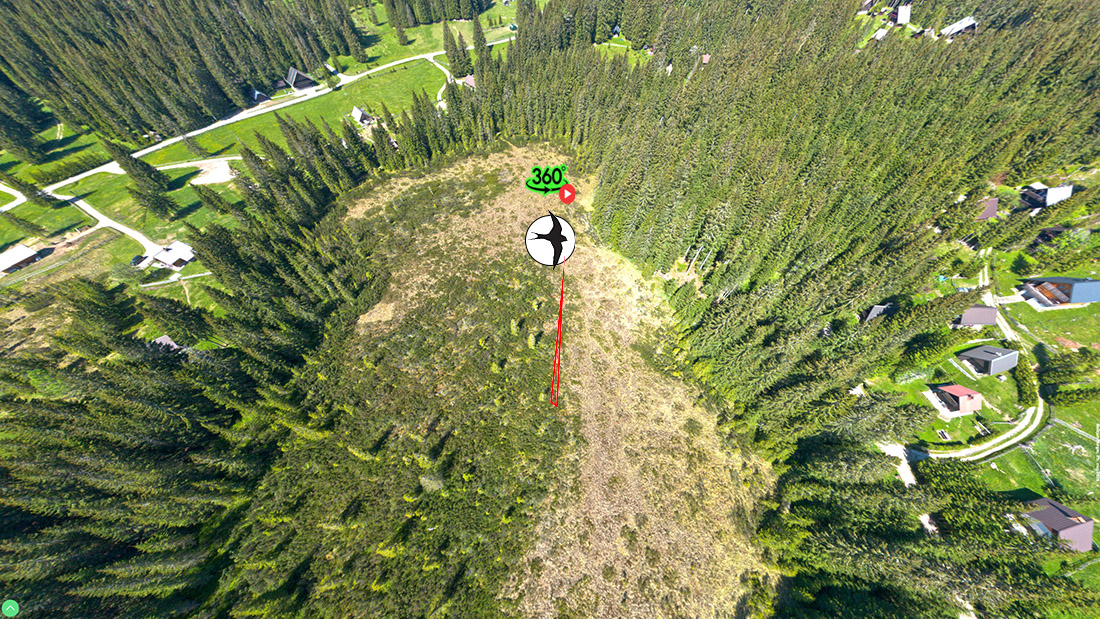
The Goreljek peat bog is one of the most important and representative raised bogs on Pokljuka. It lies at an elevation of 1,240 metres on a gently levelled part of the plateau, where water remains for long periods due to the impermeable substrate. Covering roughly two hectares, it is among the medium‑sized bogs of Pokljuka, yet its excellent preservation, clearly developed dome structure, and rich bog vegetation make it a key site for understanding the development of raised bogs in the southern Alps.
Geomorphological and hydrological characteristics
The bog formed in a shallow glacial depression that filled with water after the last glaciation. The substrate consists of clay‑silt sediments that act as a natural barrier and prevent water from draining into deeper layers. As a result, the hydrological regime is distinctly ombrotrophic – the bog is fed solely by rain and snow, not by groundwater or surface streams.
Key hydrological features include: • persistently high moisture, • very slow drainage, • strong seasonal fluctuations in water level, • pronounced acidity (pH often below 4.5).
These conditions create a highly specialised environment in which only the most adapted plant species can thrive.
Microrelief – hummocks, hollows, and the dome
Goreljek has a well‑developed domed shape, typical of raised bogs. Within it, a fine microrelief appears, consisting of: • Sphagnum hummocks rising above the surface, • wet hollows (so‑called pools) where water persists longer, • transitional zones along the margins, where the raised bog merges with spruce forest and dwarf pine.
This microrelief creates a variety of microhabitats that support numerous specialised species.
Vegetation – the realm of Sphagnum mosses
The most important structural elements of the bog are Sphagnum mosses (Sphagnum spp.), which build peat and raise the bog surface. Common species at Goreljek include: • Sphagnum magellanicum – typical of elevated parts, • Sphagnum fuscum – one of the key builders of the dome, • Sphagnum cuspidatum – found in wet hollows.
Other characteristic plants include: • round‑leaved sundew (Drosera rotundifolia) – a carnivorous species compensating for nitrogen deficiency, • bog rosemary (Andromeda polifolia) – typical of raised bogs, • small cranberry (Oxycoccus palustris) – a creeping plant with edible but tart berries, • bog bilberry (Vaccinium uliginosum), • various sedges (Carex spp.), • deergrass (Trichophorum cespitosum).
Along the margins appear spruce, dwarf pine, lingonberry, and bilberry, marking the transition to drier habitats.
Fauna – the hidden world of bog specialists
Goreljek provides habitat for numerous animal species adapted to wet, cold, and nutrient‑poor environments: • butterflies: scarce bog blue, large heath, • birds: black woodpecker, three‑toed woodpecker, occasionally Tengmalm’s owl, • amphibians: common toad, alpine newt, common frog, • insects: many mosquito species forming an important part of the food web, • reptiles: occasionally the common viper on drier edges.
Due to its isolation and stable microclimate, the bog serves as a refuge for species that are declining elsewhere.
Climate conditions
Goreljek is characterised by: • a long‑lasting snow cover (up to 5–6 months), • large temperature fluctuations, • high air humidity, • frequent fog, • cold summer nights that slow the decomposition of organic matter.
These conditions are essential for maintaining the bog ecosystem.
Protection and visitation
The Goreljek bog is part of Triglav National Park and is subject to the strictest protection regime. Because of its extreme sensitivity, visitors may walk only along the marked educational trail, approximately 1 km long. Information panels present: • the formation of the bog, • characteristic plants and animals, • the importance of peat as a natural archive, • threats to bogs (drainage, overgrowth, climate change).
Stepping onto the peat surface is prohibited, as damage may take decades to heal.
Importance for science and nature
Goreljek is exceptionally important because of: • the archival properties of peat, which preserves pollen, charcoal, plant remains, and evidence of past climates, • its role in the hydrological regime of Pokljuka, • its biodiversity, • the preservation of southern raised bogs, which are extremely rare in Europe.
It is one of the finest examples of how nature transformed after the Ice Age into a unique, sensitive, and highly specialised ecosystem.
Literature: A. Melik, Slovenian Alpine Council, pp. 172-175, 1954.
Text: Boštjan Burger, January 18, 2022