

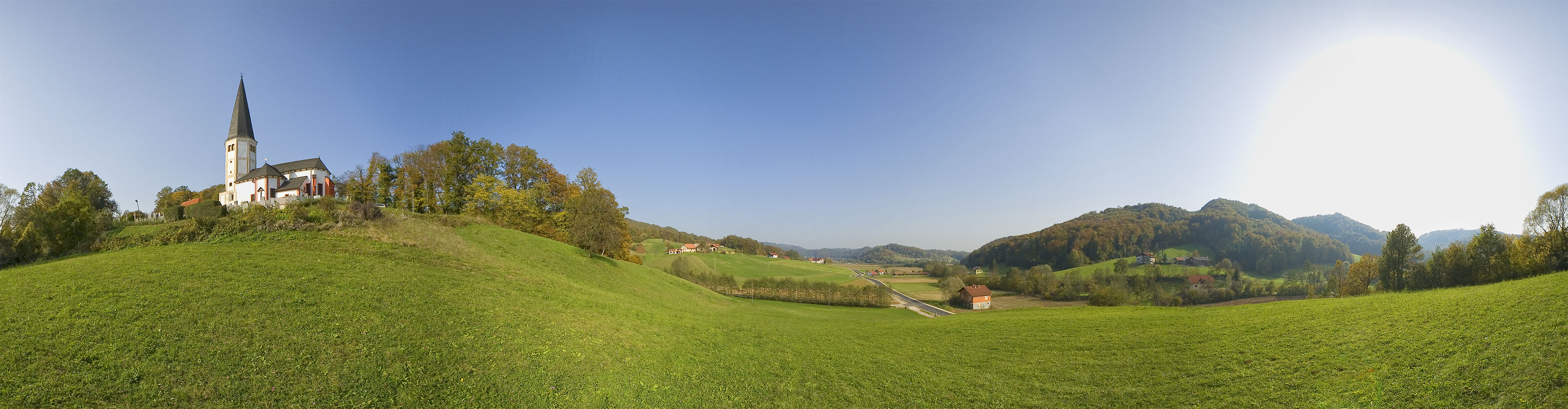
Church of the Virgin Mary at Pesek is one of those architectural treasures that weave together the quiet dignity of the past, the identity of the landscape, and the spiritual continuity of the region. Built in the mid‑16th century, it emerged at a time when the Olimje area was undergoing important cultural and religious shifts. The church served not only as a place of worship but also as a symbol of belonging and security for the local community. Its placement within the gently rolling Kozjansko landscape is deliberate: it stands where natural scenery and human creativity meet in harmonious balance.
The architectural core of the church reflects a transitional period between late Gothic forms and the gradually emerging Renaissance influences in this part of Styria. The simple yet refined design of the nave and presbytery reveals the functionality and modesty typical of rural churches of the era. Despite its simplicity, the building radiates a distinct aesthetic sensitivity, visible in its proportions, orientation, and integration into the landscape. It embodies local building traditions interwoven with broader cultural currents.
The most recognizable feature of the church is its octagonal bell tower, added in the 17th century. This architectural addition is more than a structural enhancement; it expresses the spirit of a new era that brought Baroque dynamism and greater monumentality to sacred architecture. Octagonal bell towers are relatively rare in the Slovenian architectural landscape, giving the Church of the Virgin Mary at Pesek a special significance in a wider context. With its geometric clarity and vertical emphasis, the tower serves as a landmark: a guidepost for travelers crossing Kozjansko and a constant point of orientation for locals, visible from many vantage points.
In a landscape of forests, meadows, and scattered farms, the tower stands as a quiet guardian. Its presence is not imposing but calm and attuned to the natural rhythm of its surroundings. This harmony is one of the key reasons the church is considered an exceptional architectural heritage site of the Olimje area. Its value lies not only in the beauty of the building itself but also in its ability to connect history, landscape, and community.
The Church of the Virgin Mary at Pesek remains an important part of Kozjansko’s cultural identity. Its story is one of resilience, respect for tradition, and the subtle aesthetics that people have long known how to embed into their environment. As an architectural monument, it bears witness to centuries of spiritual life; as a landscape feature, it continues to shape the experience of the place. In this interplay of function, symbolism, and beauty lies its enduring significance—one that transcends time and lives on in the consciousness of the local community and all who pause to appreciate its serene yet striking presence.