Ptuj-Ormož Regional Museum
 virtual excursions

The Ptuj‑Ormož Regional Museum is one of the oldest and most important museum institutions in Slovenia. Through its diverse activities, it connects the rich archaeological, historical, art-historical, and ethnological heritage of the wider Ptuj and Ormož area. Its specialty lies in the fact that it does not only function as a classic exhibition institution, but as a comprehensive research, documentation, and conservation center that takes care of the preservation and interpretation of the cultural heritage of one of the oldest Slovenian towns and its rural hinterland. With its openness to innovation, the museum has also become a pioneer in the field of digital heritage.
Historical Development of the Museum
The beginnings of museum activity in Ptuj date back to 1893, when the Ptuj Museum Society was founded. The first collection was modest but extremely valuable: archaeological finds were exhibited in the premises of the then lower grammar school, testifying to the exceptional historical plasticity of Ptuj, the former Roman Poetovio. Just two years later, in 1895, the collection underwent a significant expansion. Numerous individuals donated items of various types to the museum – from archaeological artifacts to objects of cultural history. Among the donors, Professor Franz Ferk stood out, after whom the museum was named the City Ferk Museum.
As the number of objects grew, the original exhibition space became too small. In 1928, the museum moved into the premises of the former Dominican monastery, which provided better conditions for storing and exhibiting collections as well as the development of professional departments.
Development after World War II
After 1945, the museum reached a new turning point. It was given management of the Ptuj Castle complex, one of the most prominent architectural symbols of the city. With this, it acquired most of the buildings it still uses today and expanded its spatial and content possibilities. In 1963, due to the expansion of its operations and regional importance, it received the title Ptuj Regional Museum. Later, its operations expanded to the Ormož area, which brought additional collections, new research tasks, and an even closer connection with the heritage of the entire Lower Drava region.
A Pioneering Step into the Digital Future
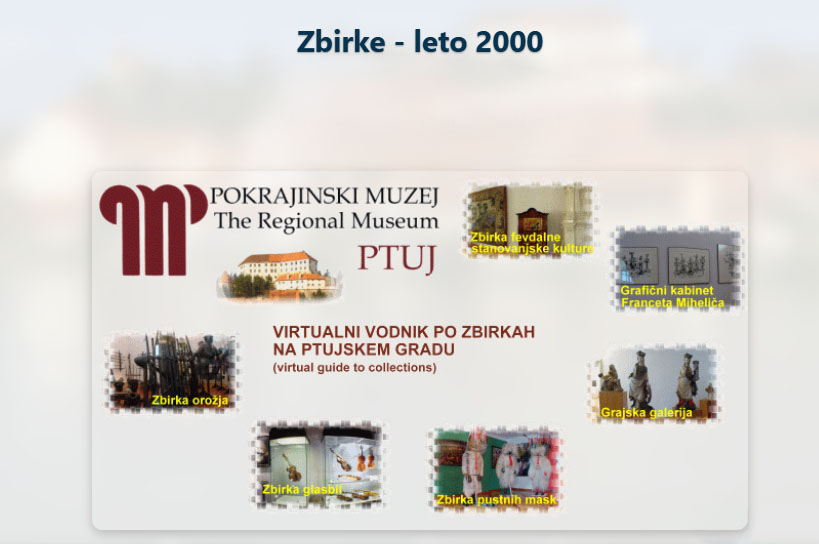
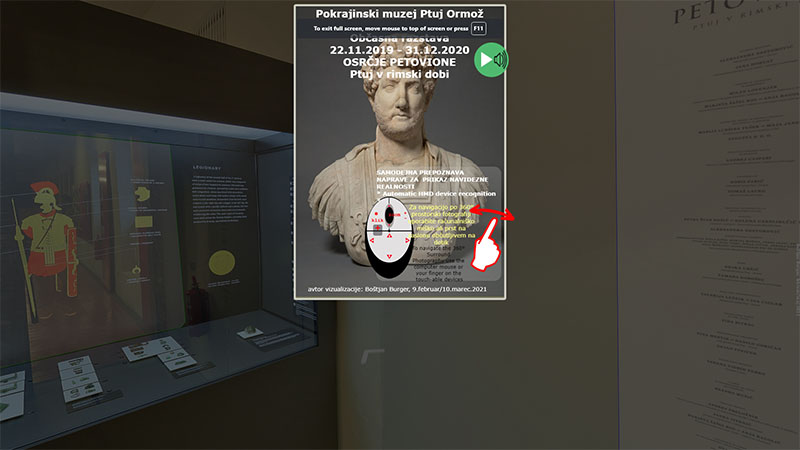
A special chapter in the history of the museum is represented by the year 2000, when it was one of the first museums in the world to present all its exhibitions in the form of virtual reality. This extremely early and bold technological step was almost visionary on a global scale. At a time when virtual reality was still in its infancy and most museums were only thinking about digitalization, the Ptuj‑Ormož Regional Museum already enabled visitors to walk through the exhibitions digitally, in three-dimensional space, regardless of physical distance.
By doing so, the museum exceeded the traditional frameworks of heritage presentation and ranked among the global pioneers of digital museology. This innovation was not just a technical curiosity, but a strategic shift: it opened doors to new forms of interpretation, enabled accessibility for vulnerable groups, expanded the museum's reach into the international space, and put Ptuj on the map as a city that understands the importance of connecting cultural heritage with the most modern technologies.
Collections and Professional Departments
The museum is organized into several professional units covering key areas of heritage:
-
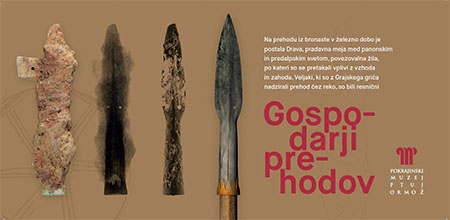
Archaeological Department: Houses extremely rich finds from prehistory, Roman Poetovio, the Migration Period, and the Early Middle Ages. Ptuj is one of the most important archaeological sites in Slovenia, which is reflected in extensive collections of Roman monuments, inscriptions, statues, and everyday objects.
-
Historical Department: Documents the development of Ptuj and its surroundings from the Middle Ages to the 20th century, with an emphasis on town rights, guild traditions, trade, crafts, and political development.
-
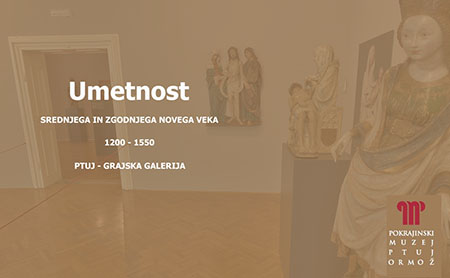
Department of Cultural History: Includes rich collections of furniture, weapons, musical instruments, textiles, fine arts, and other objects testifying to the lives of the nobility, bourgeoisie, and rural population.
-
Ethnological Department: Presents the colorful folk tradition, customs, costumes, craft traditions, and residential culture of the countryside. A special place is held by the heritage of Kurentovanje, which is today part of the UNESCO Intangible Cultural Heritage.
-
Restoration Workshops: Take care of the professional conservation and restoration of objects, allowing the museum to carry out independent and highly professional work in preserving heritage.
-
In addition, the museum includes archival, documentation, and pedagogical services that enable research work, education, and accessibility of content to the general public.
The Museum as a Guardian of Regional Identity
Today, the Ptuj‑Ormož Regional Museum acts as a central cultural institution connecting the history, art, archaeology, and ethnology of the entire area. Its collections reflect several millennia of human presence – from the first prehistoric communities to modern times. Ptuj as the oldest Slovenian town and Ormož as an important medieval and modern-age center give the museum exceptional historical depth.
With its early digital transformation, pioneering introduction of virtual reality, and unwavering dedication to researching and preserving heritage, the museum has become a model of modern museum practice. It is a place where the past meets the future, and an institution that, with expertise and vision, ensures that the rich heritage of Ptuj and Ormož remains alive, understood, and accessible – both in the physical and virtual worlds.
EXHIBITIONS