

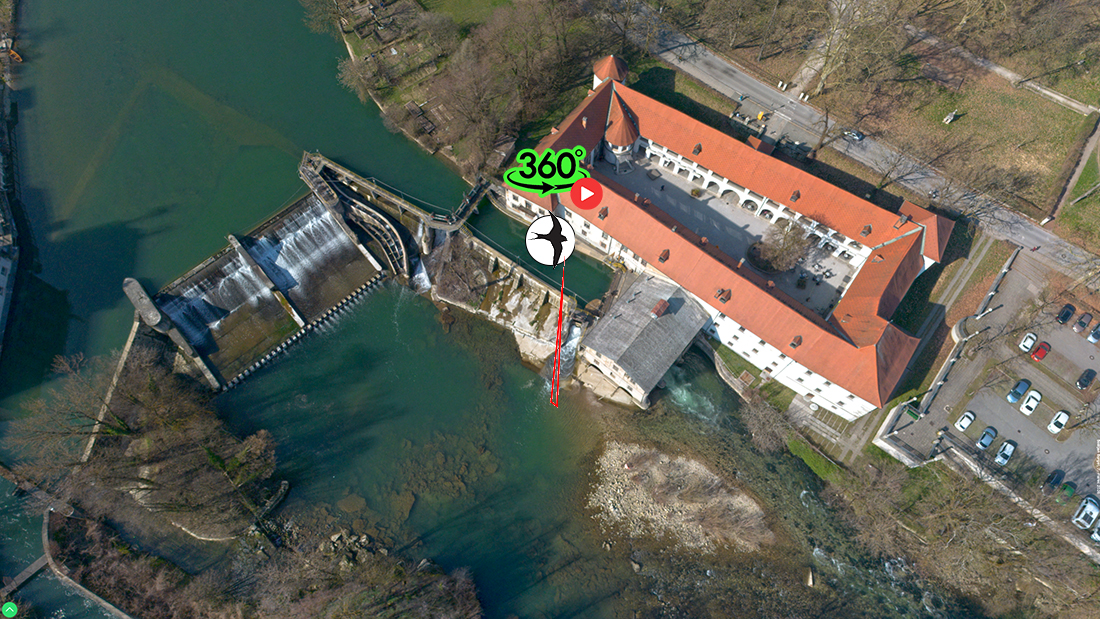
Aerial view of Fužine Manor and the Ljubljanica River
The Fužine Castle is a Renaissance manor on the eastern edge of Ljubljana, positioned right beside the Ljubljanica River, where the urban fabric gradually transitions into the densely built residential neighbourhoods of Nove Fužine. Its location feels calm and almost rural at first glance, yet it is clearly embedded in the city, surrounded by tall apartment blocks, schools, and the everyday rhythm of one of Ljubljana’s most populated districts.
The manor was built in the 16th century (between 1528 and 1557) by Vid Khisl and his son Janž Khisl, wealthy merchants of Bavarian origin. Its Renaissance design with four wings, towers, and an inner courtyard was a symbol of prestige and influence. It soon became one of the most notable buildings outside the city walls. Over the centuries, it changed owners several times, including the Jesuits and various noble families like the Terpinz family, who utilized the river for industrial purposes.
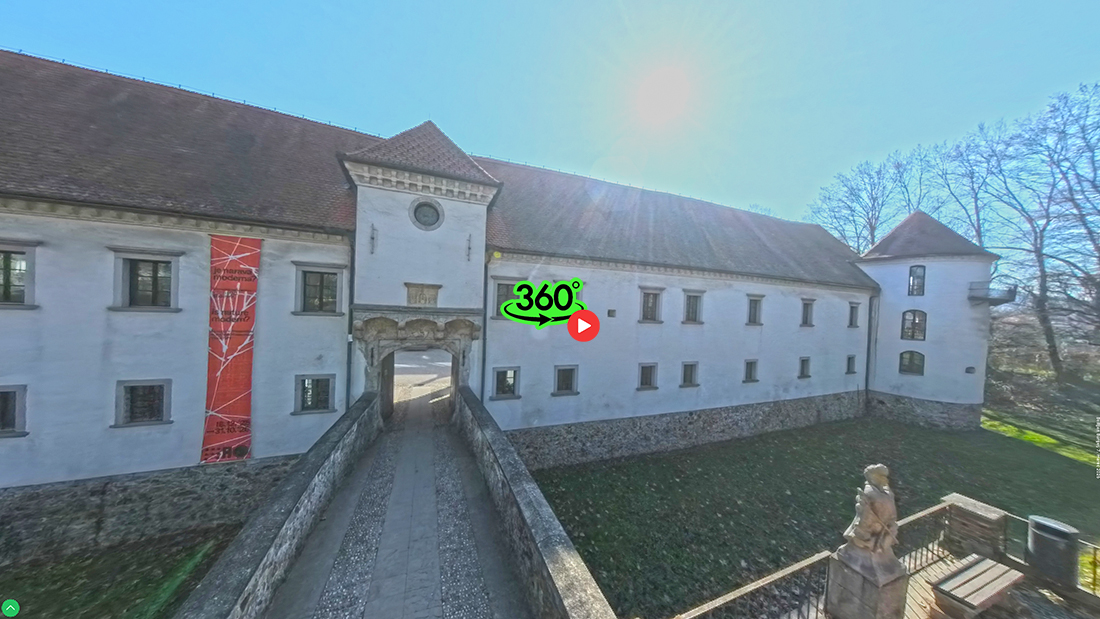
In the 19th and 20th centuries, the castle hosted industrial activities, including a paper mill. After the Second World War it was nationalised and used for housing, which led to gradual deterioration. In the late 1970s, the Architectural Museum of Ljubljana took over the property. A meticulous renovation in the 1980s, led by architect Peter Gabrijelčič, restored the building and uncovered rare Renaissance frescoes that define its identity today.
In recent history, the castle has become the headquarters of the Museum of Architecture and Design (MAO). It is Slovenia’s central institution for architecture, design, and photography, hosting major events like the Biennial of Design (BIO). The castle has successfully transformed from a private noble residence into a public cultural hub.
Surrounded by green areas and the river dam, the manor serves as a vital historical landmark within the modern Nove Fužine housing estate. It stands as a testament to Ljubljana’s diverse history, blending Renaissance heritage with contemporary cultural life.