

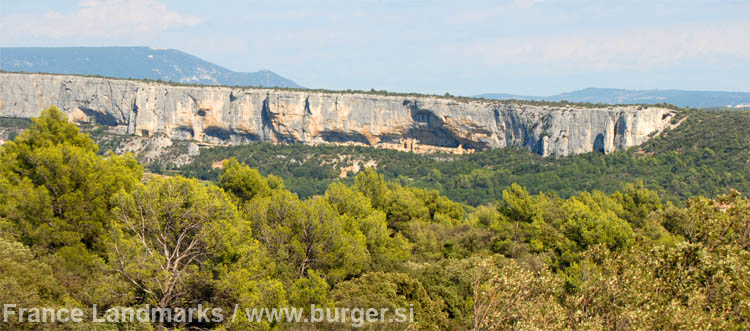
A distinctive natural backdrop rises above the village of Lioux – falaise de la Madeleine, a long, straight rock wall made of light gray limestone, which extends like a monumental natural wall for approximately 700 metres in length and reaches a height of about 100 metres. It is one of the most recognizable geomorphological elements of northern Luberon, giving the landscape a dramatic, almost theatrical character.
The cliff is composed of massive layers of Jurassic limestone, which have been reshaped over millennia by the force of erosion. At its base, numerous rock shelters and shallow overhangs open up, formed due to the selective weathering of softer rock layers. These natural niches create a diverse relief surface that is fascinating from both geomorphological and biotic viewpoints, providing shelter for birds, bats, and typical Mediterranean vegetation.
The area surrounding the rock cliff is part of the Luberon Regional Nature Park, meaning the landscape is preserved and protected. The park combines a rich geological heritage, diverse flora and fauna, and a traditional cultural landscape characterized by terraced vineyards, lavender fields, and scattered stone villages. In this context, the Falaise de la Madeleine is one of the most striking natural features – a prominent landmark that gives Lioux a unique spatial identity, attracting hikers, photographers, and nature enthusiasts alike.
A similar geomorphological feature and rock shelters can also be found in Slovenia, nearby Socerga (Veli Badin) in the Slovenian Istria region, which similarly captivates with its natural tectonic and erosional formations along with sheer cliffs.
author: Boštjan Burger