

Savonlinna is one of the most picturesque and historically rich cities in Finland. Located in the heart of the Finnish Lake District, it is world-famous primarily for its mighty medieval castle and its prestigious opera festival.
Geographical Location and Natural Features
Savonlinna is situated in the southeastern part of Finland, within the region of South Savo (Etelä-Savo). The city is unique because it is built on a chain of islands that separate two large lake systems: Haukivesi and Pihlajavesi. Both are parts of Lake Saimaa, which is the largest lake in Finland and the fourth largest natural freshwater lake in Europe.
Due to its unique island location, where urban districts intertwine with water channels and bridges, Savonlinna has earned the nickname "The Venice of Finland." Water covers more than a third of the municipality's total area, while the surrounding landscape is characterized by dense pine and spruce forests, alongside extensive systems of glacial islands.
The waters surrounding Savonlinna are also home to one of the most endangered animals in the world — the Saimaa ringed seal (Saimaanhylje), a freshwater subspecies of seal that lives exclusively in this lake system.
History of the City
The history of Savonlinna is inextricably linked to its strategic location on the border between Western and Eastern spheres of influence (the former Swedish and Russian empires).
Construction of Olavinlinna Castle (1475)
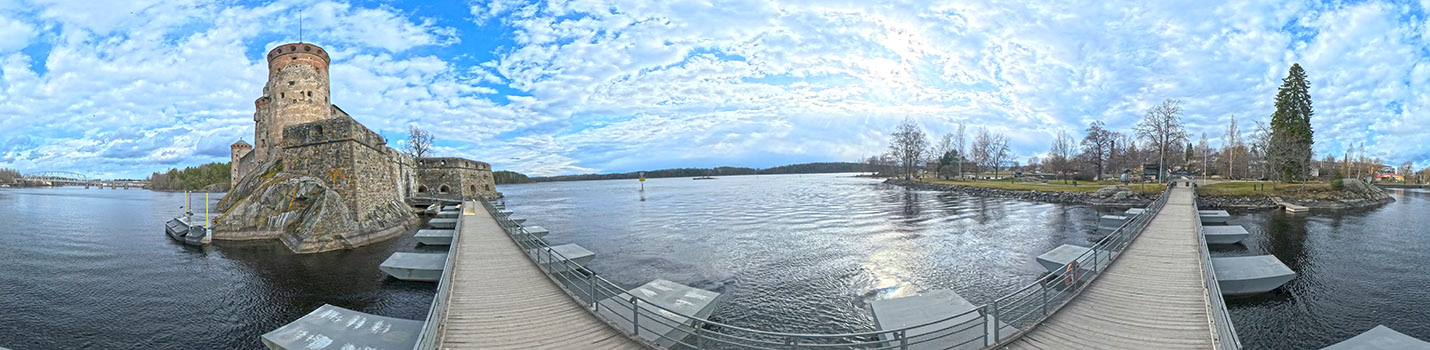
The official history of the city began in 1475 when the Danish knight Erik Axelsson Tott started building the fortress of Olavinlinna (St. Olaf's Castle). The fortress was constructed on a rocky islet amid powerful river currents to protect the eastern border of the Swedish Kingdom from attacks by the Grand Duchy of Moscow.
Founding of the Town
A settlement of merchants and artisans quickly developed around the castle. In 1639, the Swedish Governor-General Per Brahe the Younger officially granted town rights to the settlement. Although the town was repeatedly devastated and burned in the following centuries due to continuous wars between the Swedes and the Russians, its strategic importance remained critical. Following a peace treaty in 1743, the town passed under Russian rule, and in 1812, it became part of the Grand Duchy of Finland within the Russian Empire.
The 19th-Century Boom
A true economic and tourism turning point occurred in the 19th century. The opening of the Saimaa Canal in 1856 connected Savonlinna to the Gulf of Finland and world oceans, which heavily boosted the timber trade. At the same time, healing springs were discovered in the town, turning Savonlinna into a popular spa destination for the Russian aristocracy from Saint Petersburg.
Culture and Sights
Today, Savonlinna is a vibrant cultural hub, especially during the summer months when the city comes alive with tourism.
-
Olavinlinna Castle: The best-preserved medieval stone castle in the entire Nordic region. Today, it is open to visitors and offers guided tours through its mighty towers and knight halls.
-
Savonlinna Opera Festival (Savonlinnan Oopperajuhlat): A world-renowned festival held annually in July since 1912 (regularly since 1967). Opera performances take place in the large covered courtyard of the castle, which offers an unparalleled acoustic experience and atmosphere.
-
Savonlinna Museum (Riihisaari): Located on a neighboring island in an old former grain warehouse building. The museum showcases the history of steamships and sailing on Lake Saimaa, as well as the cultural heritage of the Savo region. Three historic steamboats are also moored along the museum's shore.
-
Market Square (Kauppatori): Located directly on the lakeside, it is the heart of the city where locals and tourists enjoy regional delicacies like lörtsy (a traditional filled pastry, with either savory meat or sweet apple filling).
Economy and Transport
In addition to tourism and culture, Savonlinna's economy relies on the wood and paper industries, as well as a technology sector focusing on environmental tech and wood processing. The city is also an important educational center, hosting departments of the University of Eastern Finland and the South-Eastern Finland University of Applied Sciences (Xamk).
Transport Links
Savonlinna is well-connected to the rest of Finland. It has its own airport, a rail connection to the main junction in Parikkala (from where trains continue to Helsinki), and during the summer, trips on historic steamboats connecting the city to other lakeside towns such as Kuopio and Lappeenranta are exceptionally popular.