
Argentina
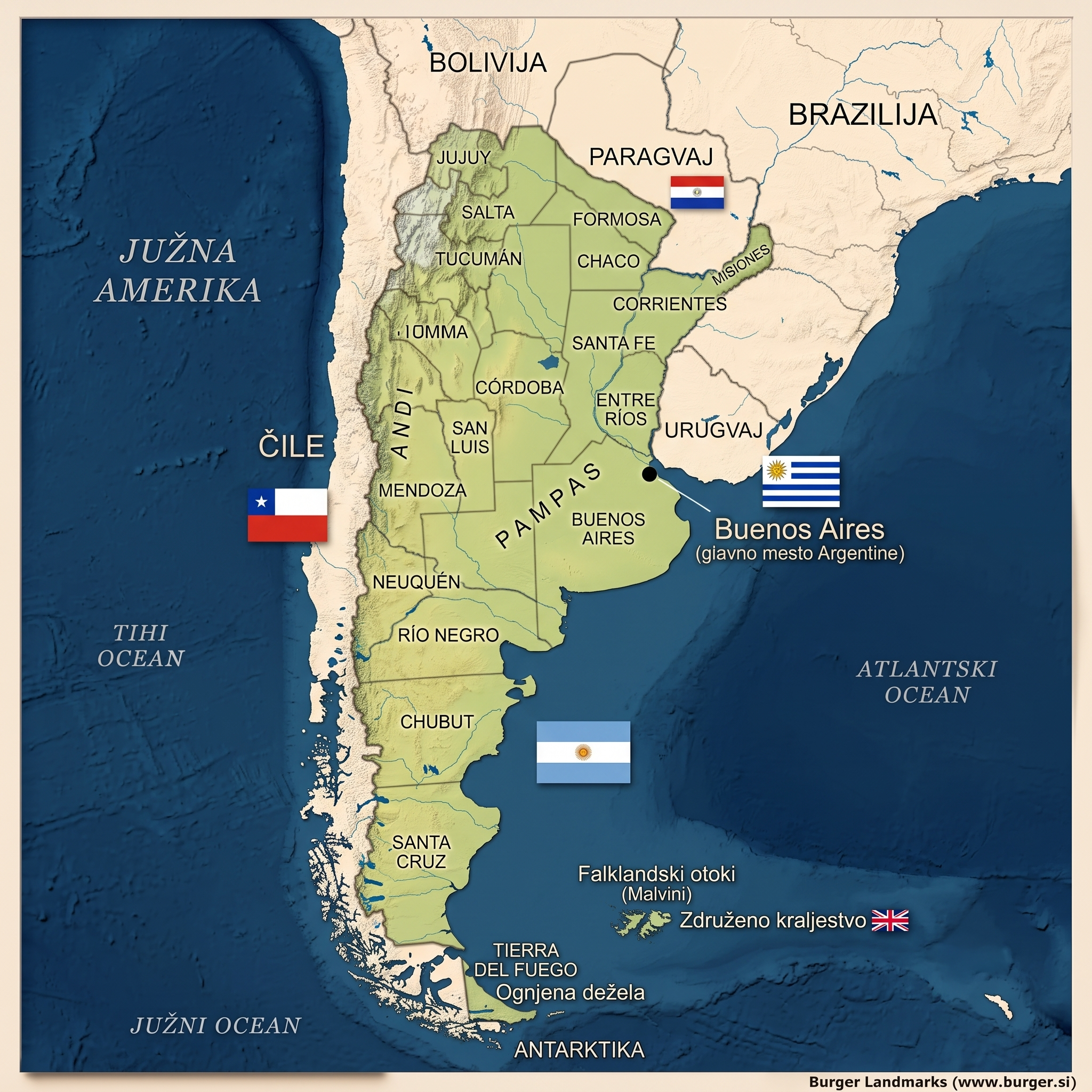
Argentina is one of those countries whose sheer geographical scale evokes a sense of openness, breadth, and elusive diversity. Stretching from the subtropical north to the cold, windswept expanses of Patagonia and Tierra del Fuego, it encompasses an extraordinary variety of landscapes, climates, and natural resources. This diversity is not merely a geographical curiosity but a foundation of Argentina’s history, economy, and cultural identity.
Geographical Location
Argentina lies in the southeastern part of South America and is the continent’s second-largest country by area. The Andes form its western border with Chile, while to the north it meets Bolivia and Paraguay. Brazil and Uruguay lie to the northeast, and the Atlantic Ocean shapes its long eastern coastline. This position grants Argentina access to major maritime routes and places it at the intersection of several climatic zones—from tropical to subantarctic.
Geology and Natural Features
Geologically, Argentina is remarkably varied. The western edge is dominated by the Andes, a young mountain range still rising due to the collision of the South American and Nazca tectonic plates. Here stand the highest peaks of the Americas, including Aconcagua, which at 6,961 meters is the tallest mountain in the Southern Hemisphere.
Further inland lie the vast Pampas, geologically young sedimentary plains that are exceptionally fertile and central to the country’s agricultural strength. Patagonia in the south is an ancient plateau shaped by wind, glaciers, and tectonic shifts, known for its basalt plateaus and fossil-rich formations. At the southern tip, the landscape breaks into the archipelago of Tierra del Fuego, where the Atlantic and Pacific Oceans meet.
History
Before European arrival, the territory of modern Argentina was home to numerous Indigenous peoples, including the Mapuche, Guaraní, and Diaguita. Spanish colonization began in the 16th century, with Buenos Aires developing into a major port and commercial hub. The 19th century brought waves of European immigrants—especially Italians and Spaniards—who profoundly shaped the country’s demographic and cultural landscape.
Argentina declared independence in 1816, but the path to a stable nation was marked by internal conflicts, civil wars, and struggles between federalists and centralists. The 20th century saw cycles of democracy and military rule, with the darkest period being the “Dirty War” (1976–1983), during which the military junta carried out widespread repression. After the return of democracy, the country gradually stabilized, though economic crises remained a recurring challenge.
Modern Economy
Argentina has one of the largest economies in Latin America, yet it is equally known for cyclical crises, inflation, and political-economic volatility. Its economy rests on:
- Agriculture – soybeans, cattle, wheat, corn; the Pampas rank among the world’s most fertile regions
- Energy – significant oil and gas reserves, especially in the Vaca Muerta formation
- Industry – automotive, food processing, textiles
- Services – tourism, finance, and a growing IT sector
Despite abundant natural resources, the country often struggles with economic instability rooted in political uncertainty, external debt, and inflation.
Political System
Argentina is a federal republic composed of 23 provinces and the autonomous city of Buenos Aires. It has a presidential system in which the president serves as both head of state and head of government. Political life is traditionally shaped by Peronism—an influential movement founded by Juan Domingo Perón—and various liberal or conservative parties. Although political dynamics can be turbulent, democratic institutions remain firmly established.
Culture
Argentine culture blends European influences, Indigenous traditions, and its own creative spirit. Some of its most recognizable cultural elements include:
- Tango, born in the port districts of Buenos Aires, now a global symbol of passion and melancholy
- Literature, with giants such as Jorge Luis Borges, Julio Cortázar, and Adolfo Bioy Casares
- Cuisine, celebrated for beef, asado, empanadas, and mate
- Music and film, merging tradition with contemporary expression
- Sports, especially football, which borders on a national religion; Argentina is home to Diego Maradona and Lionel Messi
Statistical Overview
- Location: Southern South America
- Capital: Buenos Aires
- Population: approximately 39 million
- Total area: 2,766,890 km² (Land: 2,736,690 km², Water: 30,200 km²)
- Coastline: 4,989 km
- Lowest point: Laguna del Carbón (−105 m)
- Highest point: Cerro Aconcagua – 6,960 m
Regions of Argentina
- 🏔️ Patagonia – glaciers, Andes, national parks
- 🌾 Pampas – plains, agriculture, gaucho culture
- 🧗 Andes – highest peaks of South America
- 💧 Mesopotamia – Paraná and Uruguay rivers
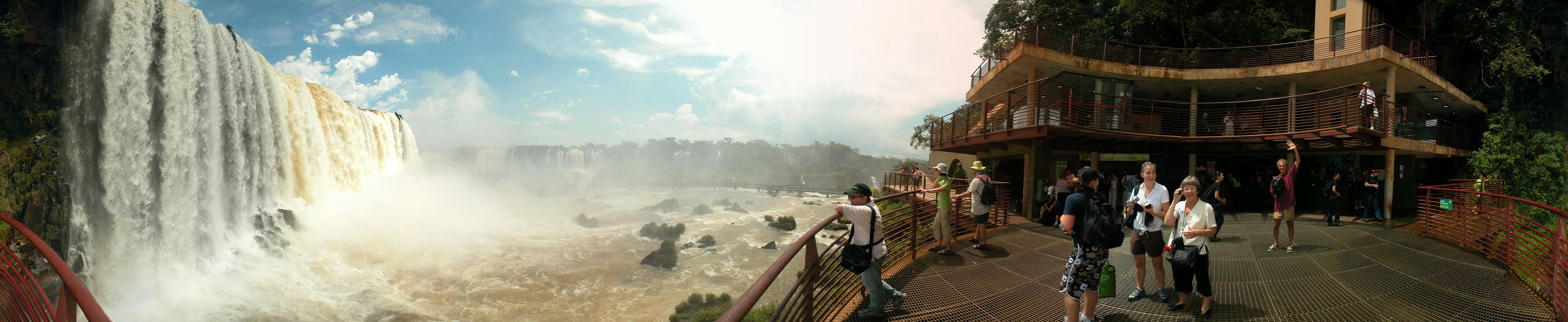
Iguazu waterfalls – Iguassu River Falls